Pueblo pottery is hand-built from local clay without a potter's wheel, polished with stones, painted with natural pigments, and fired outdoors. Each Pueblo has a recognizable style: Santa Clara and San Ildefonso blackware, Acoma polychrome, Hopi painted ware, and Cochiti figures. Collectors judge a piece on its form, surface finish, painting or carving, condition, and the artist's reputation.
Pueblo pottery is one of the oldest continuous ceramic traditions in North America, and many potters still make it the same basic way their families have for centuries. Within the wider field of Native American pottery, each Pueblo community has its own approach to form, decoration, and firing.
This guide covers five traditions collectors most often encounter, explains how to tell handmade work from imitations, and closes with what to look for in a museum-quality piece and how to care for it.
Blue Rain Gallery works with potters from several Pueblos, and their work appears as examples throughout this guide.
What Makes Pueblo Pottery Distinct
Traditional Pueblo pottery is hand-coiled from locally gathered clay, polished with smooth stones, painted with mineral or plant-based pigments, and fired outdoors. Each step is done by hand, which is why no two pieces are identical.
The process starts with clay dug from deposits on Pueblo lands. Potters dry, crush, sift, and soak it before they can work with it. Santa Clara potter Jody Naranjo, for example, digs her own clay, then sifts, soaks, and strains it to make it pottery-grade.
To build a vessel, the potter rolls clay into long coils, stacks them on a flat base, and smooths them into a continuous wall. No wheel or mold is involved, so the potter controls the shape, wall thickness, and surface directly. According to Britannica's overview of Pueblo pottery, this method has changed little since the Classic Pueblo period, roughly 1050 to 1300 AD.
Once the piece has dried enough, the potter rubs the surface with a smooth stone. This polishing, called burnishing, produces a sheen without any commercial glaze. Polishing stones are often passed down through families.
Decoration uses natural slips (liquid clay applied to the surface) and pigments. Some traditional black paints come from boiled plant matter; other colors come from minerals.
Firing happens outdoors with natural fuels such as wood and manure. The amount of oxygen reaching the pot changes its color. Smothering the fire to cut off oxygen turns the surface black, which is how blackware pottery is made.
A single vessel can take days or weeks, depending on its size, decoration, and drying conditions. That investment of time and skill is part of what collectors are paying attention to when they evaluate a piece.
Major Pueblo Pottery Traditions
Each Pueblo has a signature style. Santa Clara is known for carved, polished blackware and redware; San Ildefonso for black-on-black ware; Acoma for thin-walled polychrome with fine-line painting; Hopi for painted ware shaped by the Sikyatki revival; and Cochiti for figurative pottery.
Many Pueblos have pottery traditions of their own. This guide focuses on five that collectors see most often, with notes on how to recognize each one and a living artist working in it.
Santa Clara Pueblo
Santa Clara pottery is best known for highly polished blackware and redware with deeply carved designs. Carving into the clay, rather than painting the surface, is the Santa Clara hallmark, and it gives the design physical depth.
Blackware gets its color from a smothered firing; redware is fired with more oxygen and keeps the clay's red tone. In both, polished surfaces contrast with carved or matte areas.
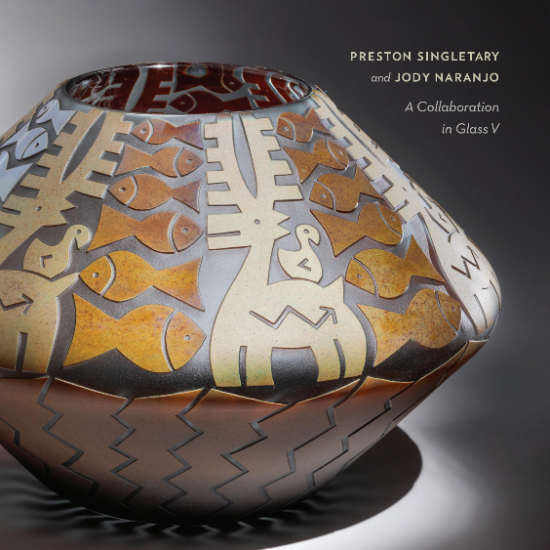
Blue Rain Gallery showcases several Santa Clara potters. Tammy Garcia is known for precisely carved vessels that push traditional forms into contemporary designs, and she has extended that work into bronze. Jody Naranjo prepares her own clay and etches detailed figurative and geometric imagery across the whole surface of her pots (a technique called sgraffito). Nathan Youngblood, grandson of noted Santa Clara potter Margaret Tafoya, is known for deeply carved vessels with carefully polished finishes.
When you look at Santa Clara pottery, check the depth and consistency of the carving, the line between polished and matte areas, and the balance of the overall form.
San Ildefonso Pueblo
San Ildefonso is the home of black-on-black pottery: matte black designs painted on a polished black surface. Maria and Julian Martinez developed the style around 1920.
It grew out of an earlier request from Edgar Lee Hewett of the Museum of New Mexico, who asked Maria and Julian to recreate pottery from ancient fragments found at a nearby archaeological site. Through experimenting with firing, the couple found that smothering the fire turned the pots black instead of red. Maria formed and polished the vessels; Julian painted the designs. The Smithsonian American Women's History Museum tells the story in Fragments of Ancient Pottery Inspired Maria Martinez, and their work is held in Smithsonian collections today.
Contemporary San Ildefonso potter Russell Sanchez works in traditional techniques while developing signature forms. His vessels often include inlaid turquoise and heishi, small shell beads. Blue Rain Gallery's artist spotlight on Russell Sanchez covers his work in more depth.
Acoma Pueblo
Acoma pottery is known for very thin walls and intricate fine-line geometric painting, typically black and orange or red designs over a white slip. It is the tradition most closely associated with polychrome pottery, meaning pottery painted in several colors.
Acoma potters have worked in this tradition for centuries. Thin walls take considerable control to build, dry, and fire without cracking, so wall thickness is one of the first things collectors check.
Fine-line painting is the other defining trait. Potters lay down closely spaced parallel lines and repeating geometric patterns that wrap the curve of the vessel. Look at how evenly the lines are spaced and how well the design follows the shape of the pot.
Hopi and Hopi-Tewa
Hopi pottery is known for finely painted, fluid designs, especially the golden-toned ware of First Mesa.
Its modern era began with Nampeyo, a Hopi-Tewa potter who revived designs from pottery found at the ancestral Sikyatki site in the late 1800s. That Sikyatki revival still shapes the painted designs of Hopi and Hopi-Tewa potters today.
Steve Lucas, a Hopi-Tewa potter and great-great-grandson of Nampeyo, is known for precise painting and a signature deep red slip. Al Qoyawayma, a Hopi potter, takes a more experimental approach, using sculptural relief and repoussé to raise forms from the vessel's surface.
With Hopi pottery, look at how the painting or relief relates to the form: precise line work, carefully finished surfaces, and relief that feels balanced with the shape of the pot.
Cochiti and Kewa (Santo Domingo)
Cochiti is known for figurative pottery, including human and animal figures. The Pueblo is also associated with the storyteller form, a central figure surrounded by smaller ones. Kewa Pueblo, also known as Santo Domingo, is known for bold painted designs on large vessels.
Harlan Reano, from Kewa Pueblo, brings the two traditions together. He learned pottery making and painting through years of mentorship with the Ortiz family of Cochiti Pueblo, and he works in Cochiti clay with all-natural materials. His early work was figurative sculpture in the traditional Cochiti style, including human figures, frogs, and lizards. He has since expanded into ollas, jars, and sculptural vessels, painting each one with cream and black designs inspired by historic Santo Domingo pottery and firing it outdoors. His work won Best of Pottery at Santa Fe Indian Market in 2012 and at the Heard Museum Guild Indian Fair & Market in 2010 and 2011. His pieces are a good study in how a sculptural form and its painted surface support each other.
How to Tell Handmade Pueblo Pottery From Imitations
Handmade Pueblo pottery usually shows slight variations from coil-building, and traditionally fired pieces often carry fire clouds. A signature and documented Pueblo affiliation help establish authenticity, and federal law makes it illegal to market work as Native-made when it isn't.
Imitations of Native American pottery are common. Molded or slip-cast "Pueblo-style" pieces are sold to tourists, often in traditional colors and designs, without being made by Pueblo artists.
When you examine a piece, look at:
- Shape and construction: Hand-built pottery may show slight variations in symmetry or wall thickness, though skilled potters can achieve remarkable symmetry.
- Surface finish: Stone polishing leaves a distinctive sheen that differs from commercial glaze.
- Mold marks: Slip-cast pieces may show seams, or identical shapes repeated across several pieces.
- Fire clouds: Darker blushes on traditionally fired pottery come from outdoor firing and are not flaws.
- Weight and wall thickness: Both should be consistent with hand-building.
- Artist identification: Look for a signature, often with a symbol, on the base, along with documentation of the artist and Pueblo.
No single trait proves authenticity. Not every handmade piece shows visible irregularities, fire clouds, or a signature, and some contemporary potters use methods that differ from traditional practice. That's why documentation matters most.
The Indian Arts and Crafts Act of 1990 is a federal truth-in-advertising law. It makes it illegal to market art as Native American-made, or as the work of a particular tribe, when it isn't.
Ask the seller to name the artist, their Pueblo affiliation, and the piece's provenance (its documented ownership history). A reputable gallery provides this information as a matter of course.
What Collectors Look For in a Museum-Quality Piece
"Museum-quality" is not a formal grade, but collectors use it to describe work that stands out in form, finish, decoration, condition, and the artist's standing. Each of these is something you can see or ask about.
Start with form. Look at the relationship between the opening, shoulder, body, and base. A well-made vessel is balanced, even when the artist has chosen an asymmetrical design. Thin, even walls are especially prized in Acoma work.
Next, the surface. On polished pottery, look for a deep, even sheen from stone burnishing. In black-on-black ware, the contrast between matte and polished areas should be crisp.
For carved pottery, look for clean edges, consistent depth, and deliberate transitions between raised and recessed areas. For painted pottery, look at the precision of the lines and how the design follows the shape.
Ask about materials and firing. Natural clays and pigments and traditional outdoor firing are part of what collectors value in traditional work.
Condition matters as much as craftsmanship. Some firing variation is expected, but cracks, chips, and repairs are not. Ask whether the piece has been restored and how any damage was handled.
Finally, the artist. Collectors look at recognition such as awards at Santa Fe Indian Market, representation in museum collections, and family lineage, since many leading Pueblo pottery artists come from multi-generation pottery families. “Techniques shared within families connect generations of artists, preserving our traditional practices. Inherited knowledge becomes the foundation for distinct artistic voices,” says Leah Garcia, a Santa Clara potter and the daughter of Tammy Garcia. Jody Naranjo, for example, won first prize in pottery at Santa Fe Indian Market in 2011 and 2022. Comparing several pieces by the same potter will also help you see which choices are consistent and intentional.
Caring for Pueblo Pottery
Traditionally fired Pueblo pottery is low-fired and porous, so keep it dry and handle it gently.
It is not watertight. Don't put water, flowers, or food in it; moisture can soak into the clay and damage painted or polished surfaces.
Dust with a soft, dry brush. Skip water, household cleaners, and polishes, which can change the surface or leave residue.
Lift a piece with both hands from underneath the base, never by the rim or handles. Display it on a stable shelf or in a case, away from edges and high-traffic spots, and out of prolonged direct sunlight or nearby heat and moisture.
If a piece cracks or chips, talk to a qualified ceramics conservator before trying a repair. Household adhesives can cause more damage and complicate later conservation.
Building a Pueblo Pottery Collection With Blue Rain Gallery
Buying from a gallery that works directly with living potters and collectors gives you documentation of the maker, a clear provenance record, and access to both new work and pieces from established private collections.
Blue Rain Gallery has worked with Native American artists since it opened in 1993 and represents Pueblo pottery artists across several traditions. Alongside new work, the gallery offers a large selection of resale and consignment pottery from private collections. Its annual Celebration of Native American Art features new work from the roster; recent shows have included Jody Naranjo, Russell Sanchez, and Harlan Reano.
Browse the gallery's artist pages to learn more about individual potters, or contact Blue Rain Gallery about a specific artist or tradition.
Frequently Asked Questions
How can you tell if Pueblo pottery is handmade?
Handmade Pueblo pottery usually shows subtle irregularities from coil-building, a stone-polished surface, and signs of outdoor firing such as fire clouds. Look for slight variations in shape and wall thickness, a burnished sheen rather than glaze, and the artist's signature or mark on the base. None of these proves authenticity on its own: skilled potters can achieve near-perfect symmetry, and not every authentic piece is signed or shows fire clouds. The most reliable evidence is documentation from the seller naming the artist and their Pueblo affiliation.
What makes Santa Clara pottery black?
Santa Clara pottery turns black through reduction firing: the potter smothers the fire to cut off oxygen, which turns the clay's surface black. The color comes from the firing, not from paint or glaze. Before firing, the potter polishes the vessel with a smooth stone, which creates the shine seen on finished pieces. Santa Clara redware is made with the same clay and polishing but fired with more oxygen, so it keeps its red color. Many Santa Clara pieces in both finishes also carry deeply carved designs.
What is the difference between Santa Clara and San Ildefonso blackware?
Santa Clara blackware is best known for designs carved into the clay, while San Ildefonso blackware is best known for matte designs painted onto a polished surface, called black-on-black. Both are Tewa Pueblos, and both use reduction firing to produce the black color. The San Ildefonso style traces to Maria and Julian Martinez, who developed it around 1920. To tell them apart, look at whether the design is cut into the clay, giving it physical depth, or painted on a flat polished surface.
Who makes Pueblo pottery?
Pueblo pottery is made by men and women from Pueblo communities such as Santa Clara, San Ildefonso, Acoma, Hopi, Cochiti, and Kewa. Historically, pottery knowledge was passed down mainly through women in Pueblo families, but men have long taken part; Julian Martinez painted the pots Maria Martinez formed. Today many leading potters, men and women alike, come from multi-generation pottery families. Blue Rain Gallery's collection includes Santa Clara potter Tammy Garcia, known for carved forms, and San Ildefonso potter Russell Sanchez, known for inlaid turquoise and heishi.
How should you care for Pueblo pottery?
Keep Pueblo pottery dry, handle it gently, and display it somewhere stable. Traditionally fired pottery is porous and not watertight, so never use it for water, flowers, or food, and don't clean it with water or household products. Dust it with a soft, dry brush instead. Lift each piece with both hands under the base, never by the rim or handles, and keep it on a secure shelf or in a case away from high-traffic areas, direct sunlight, and heat. If a piece is damaged, consult a ceramics conservator rather than repairing it at home.