Robin Jones
Tilikum in Iceland
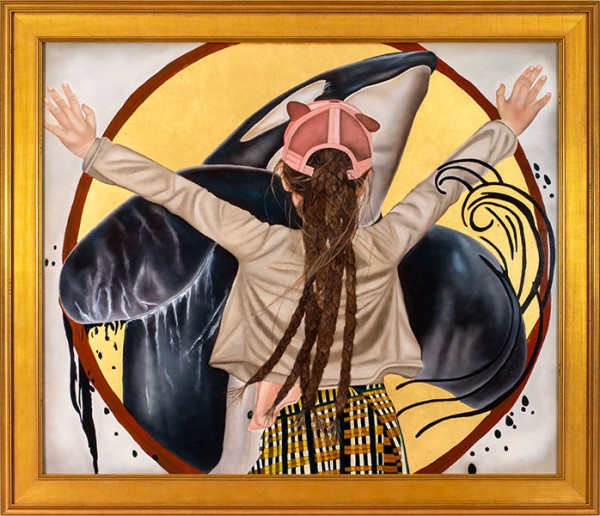
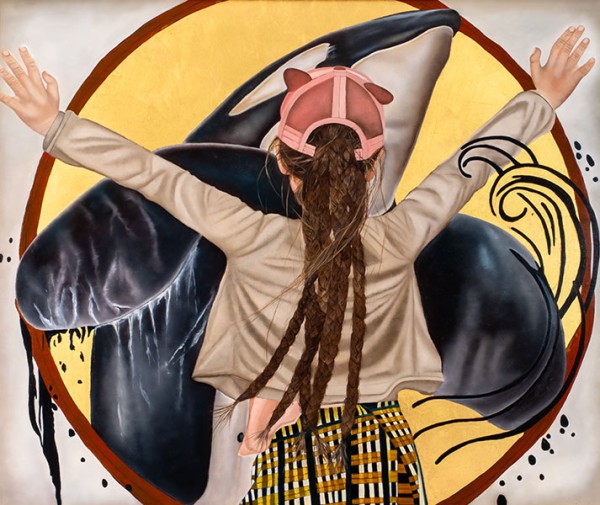
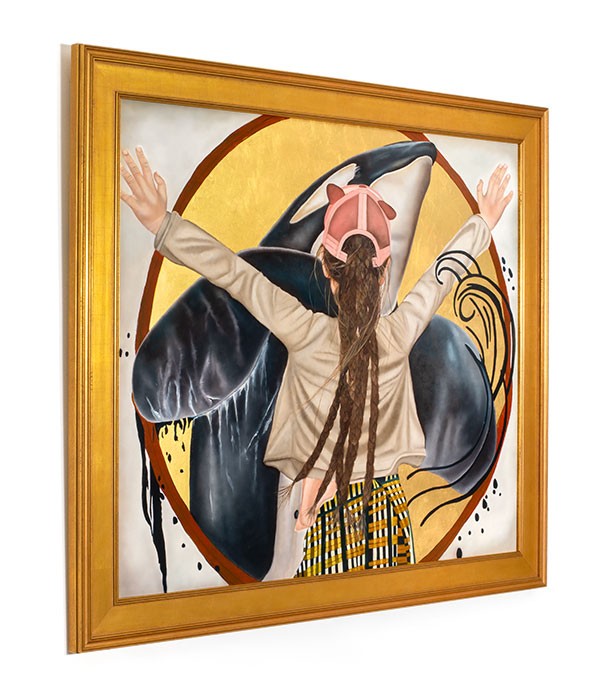
Oil, gold leaf and India ink on aluminum panel, Image: 30"h x 36"w, Frame: 36"h x 42"w, Item No. 24261,
‘Tilikum in Iceland’
The documentary film ‘Blackfish’ changed my life and made me an activist. The plight of the killer whale Tilikum, who’s story is told in heartbreaking detail in the film, changed hearts and minds regarding orcas in captivity- so much so that Seaworld was forced to end their captive orca breeding program and commit to ending orca captivity. Tilikum was stolen from his Icelandic family, his mother and his pod, when he was a very young whale and he never saw them again- indeed, Tilikum died in a concrete tank at Seaworld Orlando when he was only in his 30’s. Wild killer whales can live a human lifespan. My painting of Tilikum was my wish for him, to be home in Icelandic waters with his family- and free.
When Tilikum was dying, I read the most eloquent article about his life written by Tim Zimmerman, some of which I’ll include here:
‘But Tilikum never set out to become the symbol of an industry, a relationship between man and nature, gone wrong. He was just a wild killer whale calf in an ocean world whose life was suddenly interrupted and derailed by the human world. And the thing that most saddens me about Tilikum’s plight, and his eventual death, is the life he never lived. I have never been able to see a wild killer whale without thinking of Tilikum, languishing mostly alone in his tank in Orlando. I frequently wonder whether he has any memory of the Icelandic seas, or his mother. I wonder what he would have looked like as a full-grown bull killer whale cruising the open ocean with a regal and knife-straight dorsal fin. I wonder how far he would have traveled, how deep he would have dived, and how magnificent he might have been as a totally wild killer whale.
But he was never given the chance, and we can mourn that. Still, when Tilikum dies he will leave us with something extremely precious, something to redeem his impoverished life in captivity: a desire to give greater moral consideration to other species on our planet, and to re-think the casual ease with which we seek to use nature and all things wild for human purposes. We desperately needed that. For me, that will be Tilikum’s truest and most meaningful legacy.’